


A coin flip may look like a very basic act, yet it carries a long history of fairness, randomness, and neutrality. For centuries, people have relied on it to break ties, settle disputes, and make unbiased choices where logic alone cannot help.
Even in modern times, it remains a trusted method in sports, classrooms, and daily decision-making. Its simplicity makes it universally accessible while its randomness ensures fairness.
Today, the coin flip is also used in probability experiments and digital decision tools, proving that an ancient practice still holds relevance in the digital age. It continues to offer clarity in moments of confusion and balance in situations where choices seem equally possible.
Coin flip explained with history, uses, psychology, probability, digital tools, and fairness. Learn why coin flips remain reliable, neutral, and widely trusted today.
What Is a Coin Flip?
A coin flip is a random selection method where a coin is tossed into the air and allowed to land on either of its two sides: heads or tails. Because the conditions of each toss are unpredictable, the outcome is considered unbiased.
This randomness helps ensure that neither participant has an advantage in the decision-making process. Coin flips are used widely in games, sports events, voting tie-breakers, and casual daily choices.
The technique is valued for its fairness, affordability, and universal familiarity. It functions as a simple yet effective tool to provide decisions without emotional influence or personal bias.
How Does a Coin Flip Work?
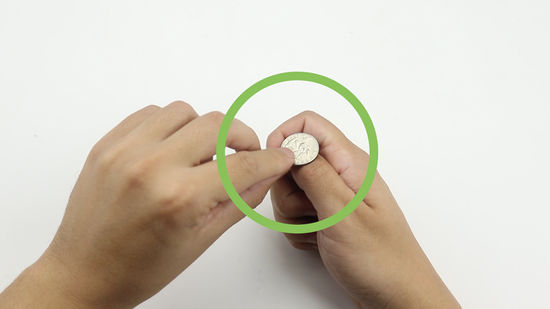
A coin flip works through basic physics and probability. When the coin is thrown upward, it rotates rapidly, and its motion becomes difficult to predict due to factors such as force, spin, wind resistance, and landing surface.
All these variations create a natural randomness that gives each side an equal 50/50 chance. Even a slight change in height or angle influences the flip’s behavior, making it nearly impossible to control.
The process is viewed as fair because each outcome is equally possible in normal conditions. This balance makes coin flips ideal for neutral decision-making in uncertain situations.
History and Origin of Coin Flipping
Coin flipping traces its roots to ancient Rome, where it was called “navia aut caput,” meaning “ship or head,” based on the designs on Roman coins. Romans used this method not only for games but also for settling legal matters and making political choices.
Over time, this practice spread across Europe and became a common decision-making tool in courts and competitions. Many cultures adopted similar techniques using their own coins or tokens.
By the Middle Ages, coin flipping became a recognized method in disputes and gambling. Today, its legacy continues globally as one of the simplest and most universal decision-making systems ever created.
Types of Coin Flips (Physical & Digital)
Coin flips now come in two main forms: physical flips and digital simulations. Physical coin flips involve tossing a real coin, giving a traditional hands-on feel that many people prefer.
Digital flips, however, use computer algorithms and random number generators to create an online result with equal probability.
These digital tools are especially helpful when a real coin is not available, offering instant access through websites and apps. Both formats aim to provide fairness and randomness, regardless of the method used.
The growing popularity of digital flips shows how ancient practices continue to adapt to modern technology. Each type serves the same purpose: unbiased decision-making.
Why Coin Flips Are Used in Decision-Making
People often use coin flips to remove personal emotions and biases when making difficult choices. When two options appear equally valid, a coin flip offers a quick and neutral solution.
It prevents arguments and makes both parties feel the decision is fair, since neither side controls the outcome. In group settings, coin flips help break ties without wasting time on lengthy discussions.
They also bring clarity when individuals feel stuck between choices, offering a clean way to move forward. Because of their simplicity and reliability, coin flips remain popular for minor but meaningful decisions in everyday life.
Coin Flip in Sports & Competitions

Sports organizations rely heavily on coin flips to ensure fairness before a match begins. In football, the coin toss determines possession and field direction, giving both teams equal chances of advantage.
Cricket uses the toss to decide which team will bat or bowl first, making it a major factor in game strategy. Even basketball, tennis, and tournament tie-breakers use coin flips to settle disputes or determine order.
These practices help maintain neutrality and avoid favoritism. By assigning equal probability to both competitors, coin flips uphold the spirit of fair play across global sports. Their role remains essential even in high-stakes competitions.
Probability Behind a Coin Flip
From a mathematical perspective, a coin flip is a perfect example of basic probability. Each flip offers two possible outcomes with equal chances, assuming the coin and method are fair.
In large experiments involving hundreds or thousands of flips, results usually balance out between heads and tails, demonstrating the law of large numbers.
This predictable statistical behavior makes coin flips useful for teaching randomness, probability distributions, and sample theory.
Researchers also study flipping mechanics to understand how randomness works in real-life conditions. Because of its clarity and simplicity, the coin flip remains a foundational tool in probability education and analysis.
Psychology of Using Coin Flips to Make Choices
Psychologically, coin flips serve as more than a randomness tool they help people identify their hidden desires. Sometimes the reaction to the outcome reveals what one truly wants, especially if a person feels disappointed by the result.
This emotional cue highlights internal preferences that may not be obvious at first. Coin flips also reduce mental fatigue by simplifying complex decisions, especially for overthinkers who struggle with multiple options.
The act of flipping can also relieve stress by shifting the burden of choice away from the individual. In this way, coin flips offer both mental clarity and emotional insight during decision-making.
Benefits of Using a Coin Flip
- Offers a neutral and fair decision-making method without personal bias
- Minimizes arguments and resolves disagreements quickly
- Saves time by providing immediate outcomes in uncertain situations
- Helps users understand randomness and probability through practical experience
- Reveals emotional preferences when individuals react to the result
- Supports decision-making by reducing mental stress and overthinking
- Accessible to anyone, requiring no complex tools or preparation
Digital Coin Flip Tools & Their Accuracy

Digital coin flip tools rely on random number generators (RNGs) to simulate the 50/50 probability of a real coin. These systems eliminate physical inconsistencies such as uneven surfaces or flawed flipping techniques.
High-quality digital generators ensure accuracy by using advanced algorithms that produce unbiased results. Many apps and websites include additional features like animations or sound effects to mimic a real coin toss.
Because they work instantly, digital flips are convenient for online games, remote decisions, and quick problem-solving. As long as the algorithm is honest and transparent, digital coin flips are just as fair as physical ones.
Common Mistakes People Make with Coin Flips
Many individuals accidentally compromise flip fairness by tossing coins with too little rotation or using damaged coins. Uneven surfaces can cause the coin to tilt or lean, affecting the final result and leading to biased outcomes.
Some people misunderstand probability, expecting patterns to change after streaks, even though randomness does not guarantee balance in small samples. Others rely too heavily on coin flips for decisions that require deeper analysis.
These mistakes reduce the effectiveness of the process and create confusion. Understanding the correct flipping technique and the nature of randomness helps ensure fairness in every decision.
When You Should NOT Use a Coin Flip
Coin flips should be avoided in matters involving health, safety, personal finances, or long-term commitments, as these situations require thoughtful analysis rather than chance.
Decisions related to relationships, emotions, or career paths also demand careful reasoning that randomness cannot provide. Relying on a coin flip in serious disputes may increase tension instead of solving problems.
Choices that require expertise, research, or planning should not be left to luck alone. While coin flips are perfect for neutral decisions, they are not suitable when responsibility and consequences are significant. Use them wisely and only in appropriate scenarios.
FAQs
1. What makes a coin flip truly random?
A coin flip is random because each toss varies in force, angle, and spin, making it impossible to predict which side will land. These changing factors give every flip equal probability.
2. Is a digital coin flip as fair as a physical one?
Yes, digital flips use random number generators that simulate true randomness, making them equally fair as long as the system is built with unbiased and secure algorithms.
3. Can a coin flip be biased?
A coin flip can become biased if the coin is uneven, the flip lacks proper rotation, or the landing surface is tilted. These conditions affect outcome fairness and must be avoided.
4. Why do sports rely on coin flips?
Sports use coin flips to ensure fairness before gameplay starts, giving both teams an equal and unbiased chance to determine possession, field side, or batting order.
5. Should I use a coin flip for important decisions?
Coin flips should only be used for simple or neutral choices. Important decisions involving safety, finances, or long-term consequences require careful thinking, not randomness.
Final Verdict
Coin flips remain one of the most reliable tools for quick, fair decision-making in both everyday life and competitive environments. Their simplicity hides a deep foundation of physics, psychology, and probability. Whether used physically or digitally, the coin flip ensures unbiased results that help resolve small dilemmas. For light, neutral choices, no method matches its speed, balance, and universal appeal.
Must Read